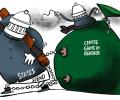
India's state-level fiscal rules have improved headline deficits, but the gains are fragile and uneven with major states still grappling with high debt levels, a World Bank report submitted to the 16th Finance Commission (FC) said. According to the report, despite nearly two decades of adoption of fiscal responsibility laws (FRLs), debt levels have not converged.

The total expenditure on the MGNREGA programme, as per the revised estimates from 2025-26, was Rs 88,000 crore, while initially, a sum of Rs 86,000 crore was allocated.

The Sixteenth Finance Commission Chairman, Arvind Panagariya, has highlighted the challenges faced by southern states due to falling fertility rates and the subsequent increase in dependency ratios and ageing populations. He noted that Andhra Pradesh, Assam, and Tamil Nadu have raised concerns about these demographic trends. The Commission is currently touring the states to gather feedback and is expected to submit its recommendations after completing nationwide consultations.

Over the years, India-EU ties have grown, and covered trade, investment, climate change, science and technology, space, digital, mobility, and connectivity.
Performance-based incentives were recommended by the 13th Finance Commission, but omitted by the 14th Finance Commission

'This Budget has a one-year agenda, which you can call the sprint, and the marathon is towards Viksit Bharat.'

With the summer approaching sooner than scheduled, Maharashtra, Telangana, Odisha, and West Bengal have already started experiencing heat waves with temperatures soaring above 40°C.

Karnataka Governor Thaawarchand Gehlot has refused to address the joint sitting of the state legislature, prompting government intervention. The reasons are unclear, but follow similar incidents in other states.
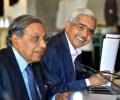
A memorandum, signed by the chief ministers or finance ministers of Andhra Pradesh, Puducherry, Karnataka, Delhi, West Bengal, Kerala and Punjab, said the terms were disruptive and a cause for concern.

With the Union Budget 2026, India's 74th, fast approaching, all eyes are once again on New Delhi's North Block as Finance Minister Nirmala Sitharaman is preparing to table it on February 1, 2026, marking her ninth Budget presentation in a row.

The panel's report also provides a range for fiscal deficit and debt path of both the Union and states and also recommended additional borrowing room to states based on performance in power sector reforms. Finance Commission is a constitutional body that gives suggestions on Centre-state financial relations. The report of the 15th Finance Commission was tabled in the Lok Sabha by Finance Minister Nirmala Sitharaman.


The Union government is projected to share about 32 per cent of central taxes with states during the financial year 2024-25 against the 15th Finance Commission's recommendation of 41 per cent. The Revised Estimates (RE) for FY24, too, show a similar share of states in the central taxes at 32 per cent. In absolute terms, however, there has been an increase in the amount devolved to states compared to the Budget Estimates (BE) for FY24 at Rs 11 trillion.

'...yet struggles to convert that human capital into domestic productivity.'
The 13th Finance Commission has outsourced a major part of the exercise for devising ways to better manage ecology, environment in the North-East to two prominent organisations. The commission has entrusted two renowned institutes of the country -- The Energy and Resources Institute and the Bhopal-based Indian Institute of Forest Management -- with the job to explore ways to better manage ecology, environment and climate change consistent with sustainable development.

The best course for the government at this time would be to tighten the seat belt a little more, without compromising on its investments in creating better infrastructure and giving a push to privatisation, points out A K Bhattacharya.

Bihar Chief Minister Nitish Kumar launched a scathing attack on his predecessor Rabri Devi, calling her appointment as Chief Minister "suspension-induced" during a heated debate in the state legislative council. The verbal sparring, marked by accusations and counter-accusations on law and order, saw Kumar accusing the RJD of being unable to handle Hindu-Muslim tensions and engaging in "mischief." Rabri Devi, in response, asserted her right to speak about her achievements during her tenure as Chief Minister. Kumar, however, retorted with a sharp, local phrase, dismissing Rabri Devi's claims. The exchange, which saw both sides engage in mudslinging, ended with the Chairman admonishing the opposition for their unruly behavior.

The Indian government has appointed Finance Secretary Tuhin Kanta Pandey as the new chairman of the Securities and Exchange Board of India (SEBI). Pandey, a 1987-batch IAS officer, will replace Madhabi Puri Buch, whose three-year tenure ends on February 28. Pandey's appointment comes at a time when the markets are experiencing bear pressure due to withdrawals by foreign institutional investors (FIIs). Pandey has extensive experience in the finance ministry, having served as the longest-serving secretary in the Department of Investment and Public Asset Management (DIPAM) and the Department of Public Enterprises (DPE). He also played a key role in the framing of the 2025-26 Budget and the drafting of the new Income Tax Bill. Pandey's appointment is for an initial period of three years.

Finance ministers of states demanded an increase in allocation under 50-year interest-free loan scheme, while fiscally stressed states like Punjab and Kerala pitched for a special package and borrowing flexibility, sources said on Friday. In a pre-budget meeting with Union Finance Minister Nirmala Sitharaman, states have also urged for higher borrowing limits to support fiscal activities, besides additional funds for Jal Jeevan Mission.

Sources said the report of the law panel on simultaneous polls is not yet finalised. They said "some more things are required to be done", indicating that the law panel will be invited again by the high-level committee.

Actor-politician Vijay held his first public meeting in Puducherry, criticising the central government for neglecting the union territory's demand for statehood and praising the local government's impartiality. He also targeted the DMK government in Tamil Nadu, suggesting they could learn from Puducherry.
In her Budget speech, Finance Minister Nirmala Sitharaman on Tuesday underlined the need for collaboration between the Centre and states to take up the next-generation reforms covering land, labour, capital and entrepreneurship. As far as revenue share goes, the government has projected to give about 32.5 per cent of central taxes to states during FY25, against the 15th Finance Commission's recommendation of 41 per cent, according to the Union Budget estimate.
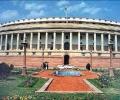
It is believed that the commission in its report has suggested higher allocation to the states during five years starting from next fiscal.
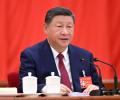
If Xi Jinping is dethroned in the future, the instrument for that may well be embedded within the PLA, notes former foreign secretary Shyam Saran.

Claiming taxes collected from the south were being distributed to north India and that the former were not getting their due share, Congress MP D K Suresh on Thursday said the southern states will be forced to demand for a separate nation if the 'injustice' was not rectified.
The report was tabled by deputy chief minister S K Modi in the state assembly.

The Indian government has expressed its disagreement with the IMF staff's 'baseline' assumption that the 50 per cent US tariffs on its goods exports 'would remain in place indefinitely', based on which the staff pegged the country's GDP growth at 6.6 per cent this year, and pared its 2026-27 projection by 20 basis points to 6.2 per cent.
Competition watchdog CCI needs to scrutinise the practices of the state-owned companies as they are not above the law of competition, the Chairman of the 13th Finance Commission, Vijay Kelkar said on Friday.
The 12th Finance Commission report on sharing of funds between Centre and states, scheduled for submission by July end, is likely to be delayed due to the elections, C Rangarajan, chairman of the commission, said on Friday.
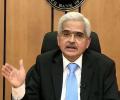
Reserve Bank Governor Shaktikanta Das on Tuesday said the fiscal-monetary coordination was at its best during the last six years even as he thanked Prime Minister Narendra Modi for giving the opportunity to head the monetary authority of the country. Das, in a series of posts on X, on his last day of his six-year term as RBI Governor, also thanked the Finance Minister, various stakeholders and his colleagues at the central bank.
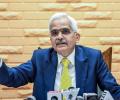
P K Mishra, a retired IAS officer of the Gujarat cadre, is currently serving as the principal secretary to the prime minister.
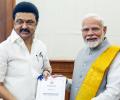
With its age-old fascination for education, southern states have done better than the North. Start-ups, IT hubs, and industry majors setting up shop have changed the face of the South. Nearly 79% of global offices set up by international conglomerates in India are in the South. Almost 46% of tech unicorns are from the South. The GDP per person in the South is 4.2 times higher than the North. None of these indicators can be ignored by any central government, whatever the political compulsions, notes Ramesh Menon.

Top Congress leaders from Karnataka led by Chief Minister Siddaramaiah on Wednesday held a protest in Delhi against the Centre over alleged injustice to the southern state in devolution of taxes, sparking a fierce slugfest between the party and the Modi government.

Out of the GST of 12 per cent, states should receive seven per cent while the rest five per cent should go to the Centre's kitty, said the task force.

The government, in the forthcoming Budget, could consider levying higher tariffs on imports to check the significant decline in rupee value witnessed in the past few months, said EY Chief Policy Advisor DK Srivastava. The noted economist argued that higher import duties would curb the demand for dollars from importers and help arrest the sliding value of the rupee, which touched a historic low of 86.70 to a dollar on January 13.

The government on Saturday announced a host of measures such as setting up of a new Fund of Funds Scheme (FFS) with Rs 10,000 crore corpus; and extension of period of incorporation by five years with a view to promote growth of budding entrepreneurs.
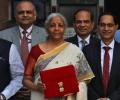
'The finance minister missed yet another opportunity to simplify the income tax structure in the Budget.' 'This was an opportune moment to get rid of the old tax system entirely and move fully to the new system,' asserts M Govinda Rao, member of the 14th Finance Commission.

The finance ministry has asked all ministries and departments not to initiate any new scheme in the current financial year and said that there is a need to use resources prudently in the wake of the COVID-19 crisis. However, funds for schemes under the Pradhan Mantri Garib Kalyan Package, the Aatmanirbhar Bharat Abhiyan package and any other special package or announcement would be allocated, according to an office memorandum by the department of expenditure, which comes under the finance ministry.

Shaktikanta Das will demit the office on Tuesday after completing six years as the 25th Governor of the Reserve Bank of India. Revenue Secretary Sanjay Malhotra will replace him as the 26th Governor. He was appointed as the Governor on December 12, 2018, after the abrupt exit of Urjit Patel.
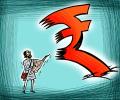
Any reduction in devolution could aggravate the strained relations between the Centre and some opposition-ruled states on a number of issues, including CAA.
